
The Commodore 64 needs no introduction: an icon of 1980s computing and one of the most-produced computers in history. But successful as the computer itself might have been, its accompanying power supply has always had a reputation for shoddy quality, with many failing even in Commodore’s heyday. If they would just fail by shutting down, that would be one thing, but unfortunately, these PSUs often fail in the worst possible way: by outputting 6 or 7 volts on their +5 V rail, thereby blowing up many hard-to-find chips inside the computer.
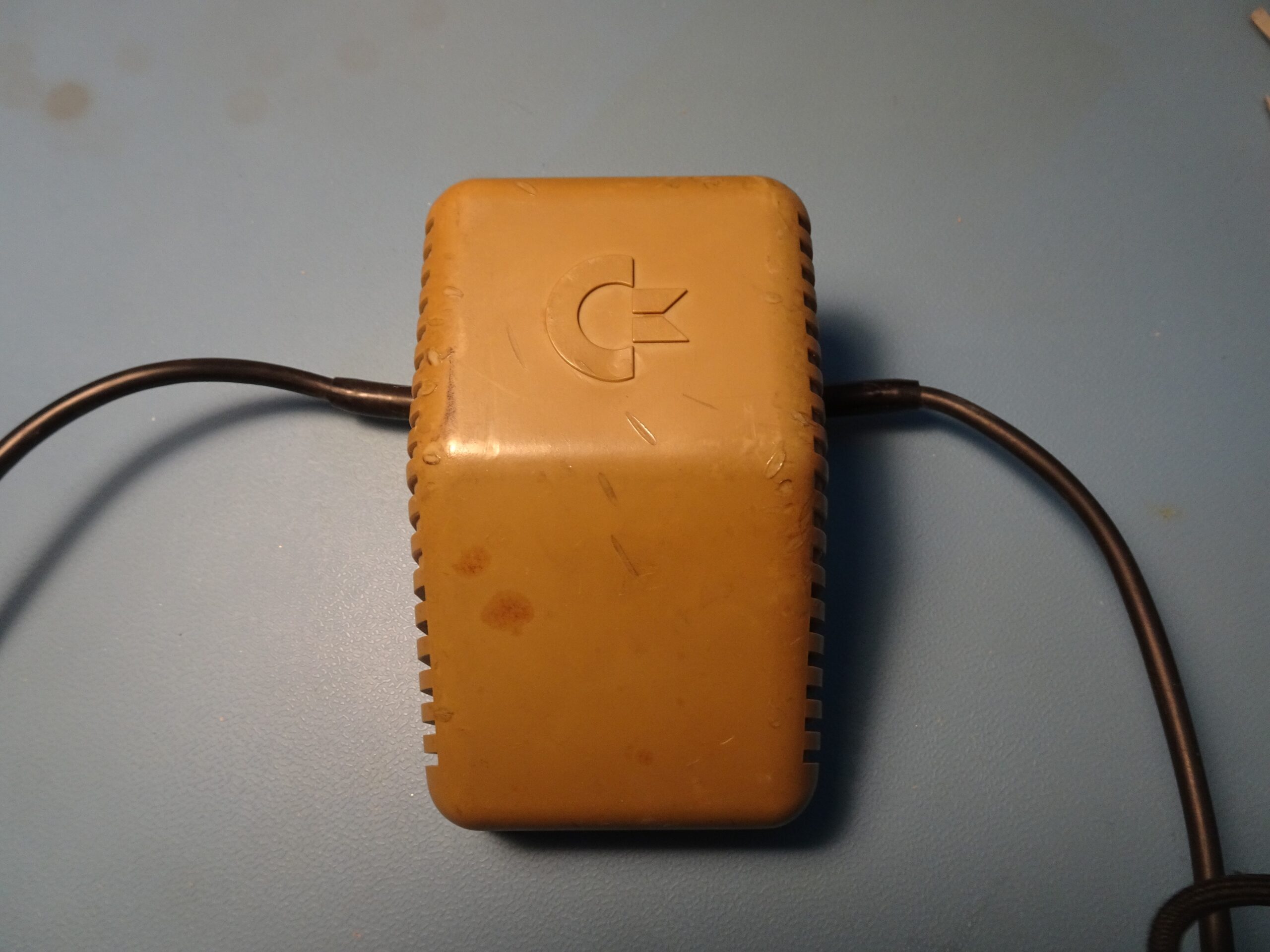
This is the one that came with my C64. It still outputs a neat 5.2 V, but given its reputation I don’t want to risk my Commodore’s guts by using it. Instead, I decided to take it apart and try to improve it. There aren’t any screws on this case, but the bottom eventually comes off if you keep prying on all sides and work it off vertically.
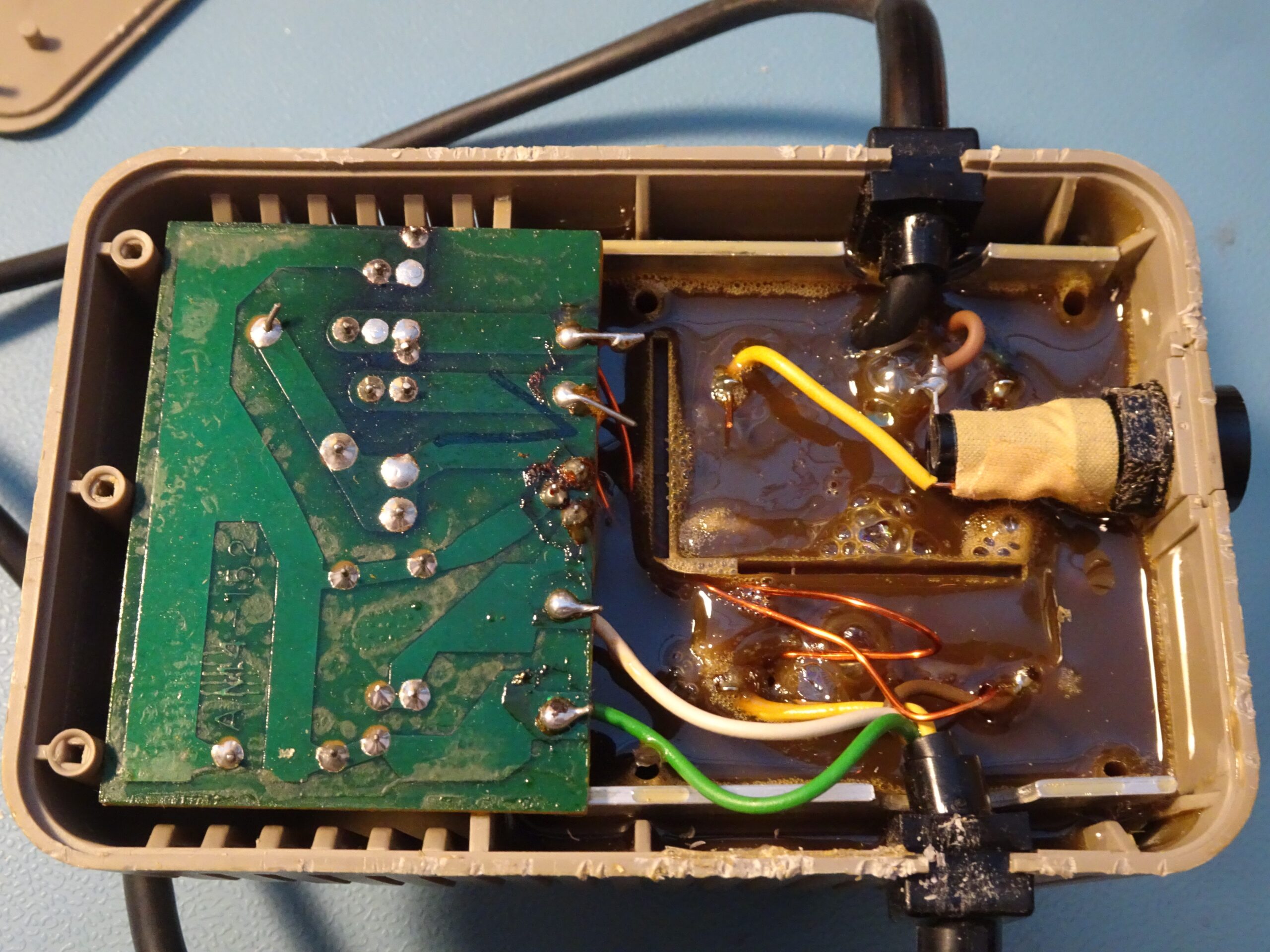
Like most small computers in the 1980s, the Commodore 64 uses a linear power supply. The design is pretty basic: a transformer with two 9 V output windings, of which one goes directly to the computer, and the other connects to the circuit board on the left. The transformer is completely enclosed in potting compound along with the voltage regulator (you can see its three pins in the middle of the board’s right edge).
Continue reading